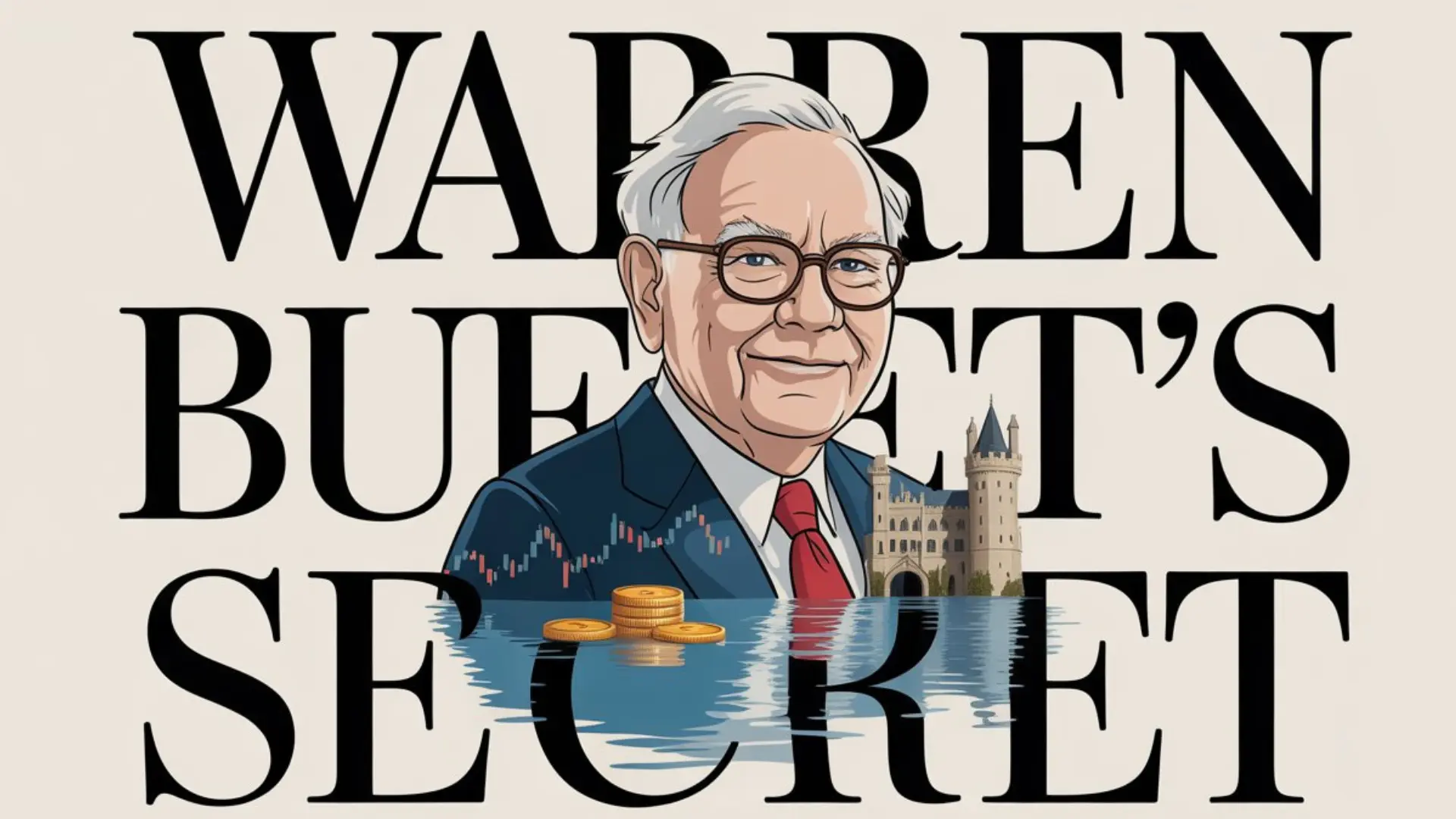
The business world pays attention to what Warren Buffett has to say about investment. One of his most important lessons is the idea of an economic moat, a medieval picture that has revolutionized modern stock picking. Understanding moat meaning provides investors with a strong basis for choosing businesses capable of providing continued profits, a concept that stock broker age firms are increasingly emphasizing in their research methods.
The Castle Defense: Decoding Economic Moat Fundamentals
Moats, or deep tunnels filled with water that surround buildings, used as a defense against invasions throughout the Middle Ages. Buffett successfully applied this idea to the business world, showing how some firms build barriers to competition that keep rivals from undermining their profits and market domination. The moat meaning in investing refers to long-term structure defense against competitive threats, not only transient benefits.
Because capitalism’s competitive forces ensure constant attacks on any company making extraordinary profits, this idea is especially important. Even prosperous businesses are vulnerable to rivals copying their tactics and cutting profit margins if they lack strong countermeasures.
The Durability Test: Separating True Moats From Illusions
Genuine moats, according to Buffett, must be lasting rather than transient. Companies whose seeming benefits turned out to be illusory—like Roman lamps that blazed brightly before going out—abound throughout business history. Expert analysts at top stock brokerage firms examine if competitive benefits need to be constantly rebuilt or can last decades of market development.
Businesses that experience constant, fast change usually don’t pass Buffett’s longevity test. Although society greatly gains from creative destruction, financial assurance is removed. A moat that has to be constantly rebuilt eventually stops being a moat at all. Investors may steer clear of industries where today’s stars turn become tomorrow’s leftovers thanks to this insight.
Five Pillars: Constructing Impenetrable Competitive Barriers
Recognizing how businesses build long-lasting advantages is important to getting moat meaning. Giants are able to make things at per-unit prices that smaller rivals cannot match because to cost leadership achieved via economies of scale. When companies own railroads or pipelines requiring billions to replicate, competitors simply cannot emerge from garages to challenge their dominance.
Brand strength creates powerful moats through customer loyalty and pricing power. Regardless of less expensive choices, famous companies fetch higher pricing, which quickly turns into higher earnings. Customers are locked into environments by high switching costs, making it financially or operationally impossible to move to competition.
Patents, unique technologies, and exclusive contracts are examples of intangible assets that provide legal monopolies or practical benefits that rivals find difficult to overcome. These obstacles protect profitability while creating long-term means of income.
The Pricing Power Revelation: Why Moats Generate Wealth
Pricing power, or the ability to raise or keep prices without losing clients to rivals, is the greatest manifestation of economic moats. Without competitive security, companies are always under pressure to lower prices, which reduces margins and kills revenue. While rivals fight to live, those shielded by big moats keep solid margins.
Similar to Buffett’s well-known “snowball rolling downhill” metaphor, this price power starts a positive loop. Protected businesses make large profits, which they subsequently spend in strengthening their moats via brand development, mergers, or innovation, further separating them from rivals. This compounding effect leads to exponential wealth gain over decades.
The Four-Step Analysis: Identifying Moat-Protected Investments
Systematic methods are used to spot moats by skilled buyers and stock brokerage firms. They start by looking at past profitability measures, especially returns on stock and capital spent. Potential moat presence is suggested by regularly high returns.
Second, they look at income streams, thinking why peers are unable to repeat success. Third, they assess how long a competitive edge will last—whether it lasts for years or decades. Lastly, they study the structure of the market, differentiating between highly competitive battlegrounds where players barely live and appealing areas with several lucrative players.
Beyond Superstar Dependence: Institutional Strength Matters
Buffett worries about equating great managers with outstanding companies. Even if great CEOs provide a lot of value, companies that need heroes to succeed don’t have real moats. The perks of the medical relationship disappear when the surgeon leaves. On the other hand, institutional moats provide investment security across management changes, regardless of changes in leadership.
Applying Moat Wisdom: Practical Investment Implications
Moat analysis is used by investors who work with skilled stock broker firms to build their portfolios. They choose companies with long-term competitive benefits, make patient investments, and let compounding work its magic over decades rather than chasing fads or momentum.
Gaining an understanding of moat meaning helps investors connect with Buffett’s tried-and-true methods for building long-term wealth by changing stock selection from guesswork into strategic business study.