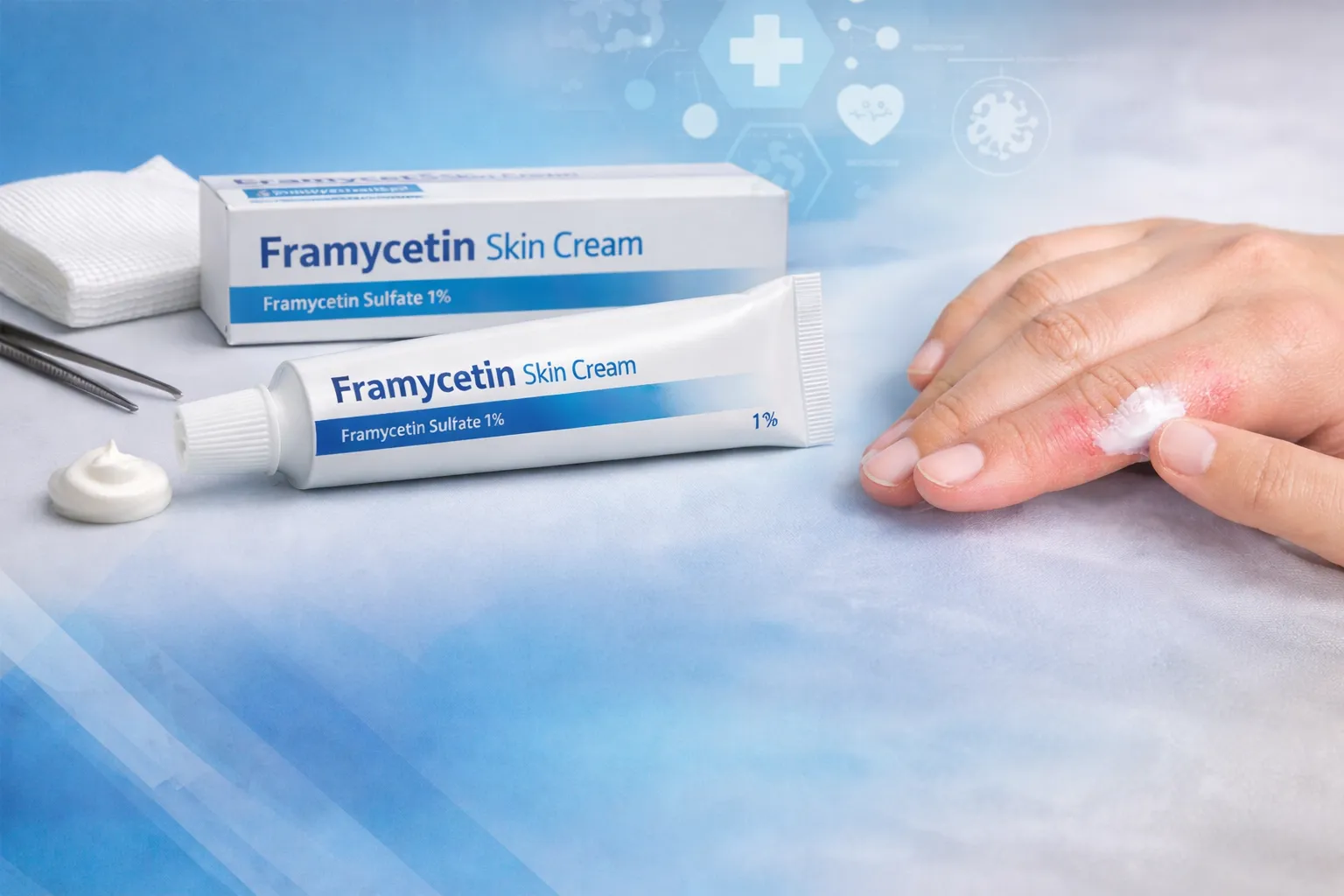
Framycetin Skin Cream is a topical antibiotic used to treat bacterial skin infections. It helps eliminate harmful bacteria from minor cuts, wounds, burns, and infected skin areas, supporting faster and safer healing. Because it works directly at the site of infection, Framycetin Skin Cream is commonly recommended for localized bacterial conditions where prompt treatment is important.
What is Framycetin Skin Cream?
Framycetin Skin Cream is a topical antibiotic medication used to treat and prevent bacterial infections of the skin. It contains framycetin sulfate as its active ingredient. Framycetin belongs to a class of antibiotics known as aminoglycosides, which are effective against a broad range of bacteria.
Unlike oral antibiotics that circulate throughout the body, Framycetin Skin Cream works directly at the site where it is applied. Because it is designed for external use only, it targets the infected area locally, which helps reduce systemic side effects.
Framycetin Skin Cream is usually available in cream or ointment form and is meant strictly for application on the skin.
How Framycetin Skin Cream Works
Mechanism of Action
Framycetin Skin Cream works by interfering with the ability of bacteria to produce essential proteins. Bacteria rely on protein synthesis to grow, multiply, and survive. Framycetin binds to bacterial ribosomes, which are responsible for protein production. When this process is disrupted, bacteria cannot function properly and eventually die.
This action helps control the infection and allows the skin to heal naturally. Because the medication acts directly where it is applied, it begins working soon after application.
Types of Infections It Treats
Framycetin Skin Cream is effective against common bacteria responsible for skin infections, including certain strains of Staphylococcus and Streptococcus species. However, it is important to understand that Framycetin Skin Cream does not treat fungal infections such as ringworm or athlete’s foot. It is also ineffective against viral infections like cold sores or herpes.
Using Framycetin Skin Cream only for confirmed bacterial infections ensures the best results.
Also Read – Skin Care in Hindi WellHealthOrganic
Medical Uses of Framycetin Skin Cream
Treatment of Minor Cuts and Abrasions
Minor cuts and scrapes are often exposed to dirt and bacteria. Even small injuries can become infected if left untreated. Applying Framycetin Skin Cream to a clean wound can help prevent bacterial growth and promote faster healing.
Management of Mild Burns and Scalds
Superficial burns damage the outer protective layer of the skin, making it more vulnerable to infection. Framycetin Skin Cream may be prescribed to reduce the risk of bacterial contamination and support recovery in mild burn cases.
Infected Wounds
When a wound becomes infected, it may show signs such as redness, swelling, warmth, and discharge. In such cases, a healthcare provider may recommend Framycetin Skin Cream to control bacterial growth and prevent the infection from spreading.
Post-Surgical Wound Care
After minor surgical procedures, doctors sometimes prescribe Framycetin Skin Cream to minimize the risk of infection at the incision site. Proper application can support safe healing during recovery.
Secondary Bacterial Skin Infections
Certain skin conditions like eczema or dermatitis can become secondarily infected due to scratching or irritation. Framycetin Skin Cream may be used to manage bacterial involvement in such cases under medical supervision.
Signs That Indicate You May Need Framycetin Skin Cream
It is important to recognize symptoms of bacterial skin infection. Increasing redness around a wound, swelling, warmth, mild pain, pus formation, and delayed healing may indicate infection. If these symptoms appear, consulting a healthcare professional is recommended before starting Framycetin Skin Cream.
Self-diagnosing skin conditions can sometimes lead to incorrect treatment. A doctor can determine whether the infection is bacterial and whether Framycetin Skin Cream is appropriate.
How to Apply Framycetin Skin Cream Correctly
Preparing the Affected Area
Before applying Framycetin Skin Cream, wash your hands thoroughly. Clean the affected area gently with mild soap and water to remove dirt and debris. Pat the area dry with a clean towel.
Application Method
Apply a thin layer of Framycetin Skin Cream directly to the infected area. Gently spread it without rubbing aggressively. In some cases, your doctor may advise covering the area with sterile gauze. After applying the cream, wash your hands again to prevent spreading bacteria.
Avoid applying excessive amounts. Using more than prescribed will not accelerate healing and may increase the risk of irritation.
Dosage and Duration of Treatment
The recommended dosage of Framycetin Skin Cream varies depending on the severity of the infection and medical advice. In most cases, the cream is applied two to three times daily.
Treatment typically continues for five to seven days. If symptoms improve earlier, it is still important to follow the full prescribed course unless advised otherwise by your doctor. Stopping treatment too soon may allow bacteria to survive and potentially return.
Long-term or excessive use of Framycetin Skin Cream without medical supervision is not recommended. Prolonged use can lead to antibiotic resistance or skin sensitivity.
Possible Side Effects of Framycetin Skin Cream
Like all medications, Framycetin Skin Cream may cause side effects in some individuals.
Common Side Effects
Mild irritation at the application site is the most frequently reported issue. Some people may experience slight redness, itching, or a burning sensation shortly after applying the cream. These symptoms are usually temporary and resolve on their own.
Less Common Reactions
In certain cases, individuals may develop contact dermatitis or increased skin sensitivity. If irritation persists or worsens, discontinuing use and consulting a healthcare provider is advisable.
Rare but Serious Reactions
Although rare, allergic reactions can occur. Symptoms such as severe rash, swelling, or difficulty breathing require immediate medical attention. If any unusual symptoms appear while using Framycetin Skin Cream, seek medical advice promptly.
Precautions and Safety Considerations
Avoid Use for Non-Bacterial Conditions
Framycetin Skin Cream is specifically designed to treat bacterial infections. It should not be used for fungal or viral skin conditions. Misuse can delay proper treatment and worsen the condition.
Caution During Pregnancy and Breastfeeding
If you are pregnant or breastfeeding, consult your doctor before using Framycetin Skin Cream. Although topical absorption is generally minimal, medical guidance ensures safety.
Avoid Application on Large Areas
Applying Framycetin Skin Cream to large areas of damaged skin may increase absorption into the bloodstream. This is especially important for individuals with kidney concerns, as aminoglycosides can affect kidney function if absorbed in significant amounts.
Allergy Awareness
Individuals with known allergies to aminoglycoside antibiotics should avoid using Framycetin Skin Cream. Always inform your doctor about any previous allergic reactions to medications.
Framycetin Skin Cream Compared to Other Antibiotic Creams
There are several topical antibiotics available for treating skin infections. Framycetin Skin Cream is often compared with other aminoglycosides such as neomycin. Both work in similar ways, but individual tolerance may vary.
Some creams contain a combination of antibiotics, antifungals, or steroids. Framycetin Skin Cream usually contains a single antibiotic component, making it suitable for straightforward bacterial infections without additional complications.
Your doctor will select the most appropriate treatment depending on your specific condition.
Frequently Asked Questions About Framycetin Skin Cream
Can Framycetin Skin Cream Be Used for Acne?
Framycetin Skin Cream is not typically recommended for acne treatment unless a bacterial infection is confirmed. Acne often requires specialized therapies designed specifically for that condition.
Is Framycetin Skin Cream Safe for Children?
Framycetin Skin Cream may be prescribed for children, but only under medical supervision. Proper dosage and duration must be carefully followed.
How Quickly Does Framycetin Skin Cream Work?
Improvement may be noticeable within a few days of starting treatment. If there is no improvement within a week, medical reassessment is necessary.
What Should I Do If I Miss a Dose?
If you forget to apply Framycetin Skin Cream, apply it as soon as you remember. Avoid applying extra amounts to compensate for the missed dose.
Proper Storage of Framycetin Skin Cream
Store Framycetin Skin Cream at room temperature and keep it away from direct sunlight. Ensure the cap is tightly closed after each use. Do not freeze the cream. Keep it out of reach of children and always check the expiry date before application.
Proper storage helps maintain the effectiveness and safety of the medication.
The Importance of Responsible Antibiotic Use
Antibiotic resistance is a growing global health concern. Overuse or misuse of antibiotics, including topical medications like Framycetin Skin Cream, can lead to bacteria becoming resistant over time. When bacteria become resistant, infections become harder to treat.
Using Framycetin Skin Cream only when necessary and completing the prescribed course helps preserve its effectiveness. Never share antibiotic medications with others or use leftover cream for conditions other than the intended use.
When to Seek Medical Attention
While Framycetin Skin Cream is effective for minor bacterial infections, some situations require professional evaluation. If the infection spreads, symptoms worsen, fever develops, or severe pain occurs, consult a healthcare provider immediately.
Prompt medical attention ensures proper treatment and prevents complications.
Conclusion
Framycetin Skin Cream is a reliable and effective topical antibiotic used to treat minor bacterial skin infections, infected wounds, cuts, and burns. Its mechanism of action targets bacteria directly at the site of infection, promoting faster healing and reducing complications.
When used correctly and under medical guidance, Framycetin Skin Cream is generally safe and well tolerated. However, it should be used responsibly and only for bacterial infections. Proper diagnosis, correct application, and adherence to treatment guidelines are essential for achieving the best results.
Frequently Asked Questions
1. What is Framycetin Skin Cream used for?
Framycetin Skin Cream is used to treat minor bacterial skin infections. It is commonly applied to infected cuts, wounds, burns, and abrasions to prevent or control bacterial growth. Doctors may also prescribe Framycetin Skin Cream for secondary bacterial infections associated with skin conditions like dermatitis.
2. Can Framycetin Skin Cream be used for fungal infections?
No, Framycetin Skin Cream is not effective against fungal infections such as ringworm or athlete’s foot. It is an antibiotic that works only against bacteria. Using it for fungal or viral infections will not provide relief and may delay proper treatment.
3. How often should I apply Framycetin Skin Cream?
Framycetin Skin Cream is typically applied two to three times a day, depending on the severity of the infection and your doctor’s advice. Always follow the prescribed instructions and avoid using more than recommended.
4. Is Framycetin Skin Cream safe for children?
Framycetin Skin Cream may be used in children, but only under medical supervision. The doctor will determine the correct dosage and duration based on the child’s age and condition.
5. Can I use Framycetin Skin Cream on my face?
Framycetin Skin Cream can be used on the face if prescribed by a healthcare professional. However, extra care should be taken to avoid contact with the eyes, mouth, and nose. It should not be used for acne unless specifically recommended by a doctor.
6. What are the possible side effects of Framycetin Skin Cream?
Some people may experience mild redness, itching, or irritation at the application site. In rare cases, allergic reactions can occur. If you notice severe swelling, rash, or worsening symptoms while using Framycetin Skin Cream, seek medical attention immediately.
7. How long does it take for Framycetin Skin Cream to show results?
Improvement is often noticeable within a few days of starting treatment. However, it is important to complete the full course as prescribed. If there is no improvement after five to seven days, consult your doctor for further evaluation.