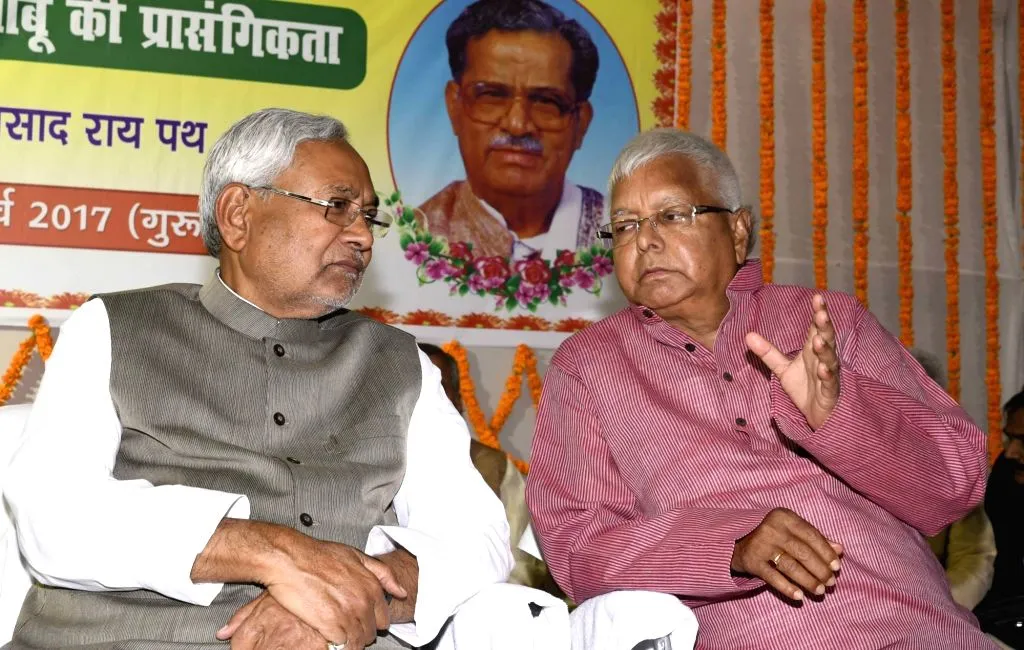
Indian politics has produced many administrators, ideologues, and reformers, but very few figures who turned politics into mass theatre the way Lalu Prasad Yadav did. He is not merely a politician; he is a phenomenon who blended humor, caste politics, populism, and survival instincts into a style uniquely his own. For supporters, he is a messiah of social justice who gave voice and dignity to the marginalized. For critics, he symbolizes a period of administrative decline and corruption. Yet, whether admired or criticized, he remains impossible to ignore.
Lalu Prasad Yadav: Quick Bio
| Attribute | Details |
| Full Name | Lalu Prasad Yadav |
| Date of Birth | 11 June 1948 |
| Age (Feb 2026) | 77 years |
| Place of Birth | Phulwaria, Gopalganj, Bihar |
| Parents | Father: Kundan Rai (farmer); Mother: Marachhiya Devi |
| Caste | Yadav |
| Religion | Hindu |
| Qualifications | BA Political Science, LLB (Patna University) |
| Early Activism | Bihar Movement leader; jailed in 1975 Emergency |
| Spouse | Rabri Devi (m. 1973; ex-CM Bihar) |
| Children | 9 (7 daughters incl. Misa Bharti, Rohini Acharya; 2 sons: Tej Pratap, Tejashwi Yadav) |
| Notable Relatives | Children active in RJD politics |
| Key Positions | MP (1977); Bihar CM (1990-97); RJD Founder (1997); Rail Minister (2004-09) |
| Achievements | Stopped Rath Yatra; Railways profit (₹38k cr surplus claimed) |
| Recent Role | RJD President; influenced 2020 Bihar polls |
| Major Cases | Fodder scam convictions; bail 2021, disqualified till ~2027 |
| Health (Recent) | BP, diabetes issues; AIIMS admission 2025, stabilized |
| Personal/Family Assets | ~₹20 crore (Lalu-Rabri); children hold ₹100cr+ properties |
Early Life and the Making of a Political Mind
Lalu Prasad Yadav was born on June 11, 1948, in rural Bihar, a state historically marked by poverty, feudal hierarchies, and deep caste divisions. His upbringing in a modest agrarian family shaped both his political language and worldview. Unlike leaders molded in elite institutions, Lalu’s political instincts were rooted in the rhythms of village life. His speech, humor, and metaphors came straight from the soil, which later became his biggest political asset.
He studied at Patna University, where his political consciousness sharpened. Student politics in the late 1960s and early 1970s was a hotbed of activism, and Lalu quickly emerged as a fiery student leader. His association with socialist ideas and mass mobilization during this period laid the foundation for his future political identity.
The JP Movement and National Recognition
The turning point in Lalu’s early political life came during the movement led by Jayaprakash Narayan against the Emergency imposed in 1975. The agitation brought together students, socialists, and anti-Congress forces across India. Lalu’s role in mobilizing youth earned him recognition within socialist circles.
In 1977, riding the anti-Emergency wave, he was elected to the Lok Sabha at a remarkably young age. This victory marked his entry into national politics, but his core political base remained firmly in Bihar. Even at this stage, he demonstrated a rare ability to connect with ordinary people through earthy humor and direct speech, something that distinguished him from conventional leaders.
Rise to Power and the Mandal Era Transformation
The late 1980s and early 1990s were years of dramatic social transformation in Indian politics. The implementation of the Mandal Commission recommendations, which expanded reservations for Other Backward Classes, reshaped political alignments. Lalu Prasad Yadav emerged as one of the most powerful leaders of this new social justice wave.
In 1990, he became the Chief Minister of Bihar. His rise symbolized a shift in power from upper-caste dominance to backward caste assertion. For many marginalized communities, his leadership represented dignity and visibility in a system that had historically excluded them. His political messaging was simple but potent: power should reflect social realities, not just elite interests.
His tenure fundamentally altered the caste equations of Bihar politics. Groups that had previously remained on the fringes of power now saw one of their own at the helm. This shift created a loyal support base that would stand by him through many political storms.
The Birth of a Political Machine
In 1997, amid political turbulence, Lalu formed the Rashtriya Janata Dal. The party became the vehicle for his social justice agenda and consolidated his hold over Bihar’s political landscape. The RJD was built not merely as an electoral organization but as a social coalition of backward classes, minorities, and rural voters.
The party’s strength lay in its emotional connection with its voter base. Lalu’s rallies were not typical political events; they felt like public gatherings where humor, satire, and sharp political messaging blended seamlessly. His ability to turn complex issues into relatable anecdotes made him a master communicator.
Leadership Style: Humor as a Political Weapon
One of the most distinctive aspects of Lalu Prasad Yadav’s career is his leadership style. He often used jokes, mimicry, and rustic metaphors to disarm opponents and engage crowds. What seemed like casual humor often carried layered political messaging. He understood that in a country with vast illiteracy at the time, communication had to be direct and memorable.
This performative style helped him dominate media coverage as well. Even critics found his statements impossible to ignore. By turning press interactions into spectacles, he ensured that he stayed at the center of political conversations. This visibility translated into sustained relevance, even when he was not in formal power.
The Railway Minister Years and Administrative Surprise
Between 2004 and 2009, Lalu served as India’s Railway Minister. Many expected his tenure to be purely symbolic, but it turned out to be one of the most discussed phases of his career. During this period, Indian Railways reported financial improvements that drew attention from management experts.
He promoted measures aimed at increasing freight capacity, improving efficiency, and optimizing resources. Business schools around the world even discussed the railway turnaround as a case study. For supporters, this period proved that Lalu was more than a populist orator; he could also oversee large administrative systems.
Controversies and Legal Battles
No account of Lalu Prasad Yadav is complete without addressing the controversies that shadowed his career. The most prominent among them is the fodder scam, a corruption case involving fraudulent withdrawal of funds meant for cattle feed. Legal proceedings led to convictions that disqualified him from holding public office for a period.
These legal challenges significantly dented his image, especially among urban and middle-class voters. Opponents used the scandal to brand his rule as synonymous with misgovernance. Yet, despite these setbacks, his core support base remained remarkably resilient. For many followers, the legal troubles were viewed through the lens of political vendetta rather than moral failure.
Family, Succession, and Political Legacy
Lalu’s political journey also involves his family. When legal troubles forced him to step aside from the Chief Minister’s position in the late 1990s, his wife Rabri Devi took over, marking a unique moment in Indian politics. Later, his children, particularly Tejashwi Yadav, emerged as key political figures.
This transition sparked debates about dynasty politics. Critics argued that power remained concentrated within one family, while supporters saw it as continuity of a political movement. Regardless of perspective, the Yadav family continues to influence Bihar’s political trajectory.
Also Read – Bhagwant Mann
Public Perception: Between Hero and Villain
Lalu Prasad Yadav’s public image is deeply polarized. For many in marginalized communities, he remains the leader who challenged entrenched hierarchies and gave them political voice. His tenure is remembered as a time when the powerful had to acknowledge the existence of the previously unheard.
For critics, however, his rule represents a period when development lagged and law and order deteriorated. This dual perception makes him one of the most debated leaders in India’s recent political history. Few politicians evoke such strong emotional responses on both sides.
Political Resilience and Continued Relevance
Despite legal setbacks, health challenges, and shifting political equations, Lalu Prasad Yadav continues to wield influence. His party remains a major force in Bihar, and his political guidance still matters in opposition alliances at the national level. This longevity speaks to his deep-rooted social base and strategic acumen.
His career demonstrates that in Indian politics, emotional connect and identity politics can sustain relevance even when formal power fluctuates. He has repeatedly shown an ability to adapt to changing circumstances and remain part of the political conversation.
Conclusion: A Legacy That Refuses to Fade
Lalu Prasad Yadav’s life story is a study in paradox. He is a leader who empowered millions yet remains associated with controversy. He is both a symbol of social justice and a target of corruption allegations. He is a comedian on stage and a shrewd strategist behind the scenes.
FAQs
1. Who is Lalu Prasad Yadav?
Lalu Prasad Yadav is an Indian politician known for his strong role in social justice politics, especially representing backward classes and minorities. He is one of the most recognizable political figures from Bihar.
2. Which party did Lalu Prasad Yadav found?
He founded the Rashtriya Janata Dal (RJD) in 1997, which became a major political force in Bihar.
3. When was he the Chief Minister of Bihar?
Lalu Prasad Yadav served as Chief Minister of Bihar from 1990 to 1997, a period marked by the rise of Mandal-era caste politics and social justice movements.
4. What was his role in the Indian Railways?
He served as Railway Minister of India from 2004 to 2009 and was associated with a financial turnaround of Indian Railways, which gained attention in management discussions.
5. What is the fodder scam associated with him?
The fodder scam was a corruption case involving illegal withdrawal of government funds meant for cattle feed in Bihar. Lalu Prasad Yadav was convicted in related cases, which led to legal and political consequences.
6. Is his family involved in politics?
Yes. His wife Rabri Devi served as Chief Minister of Bihar, and his son Tejashwi Yadav is a prominent political leader, continuing the family’s influence in state politics.