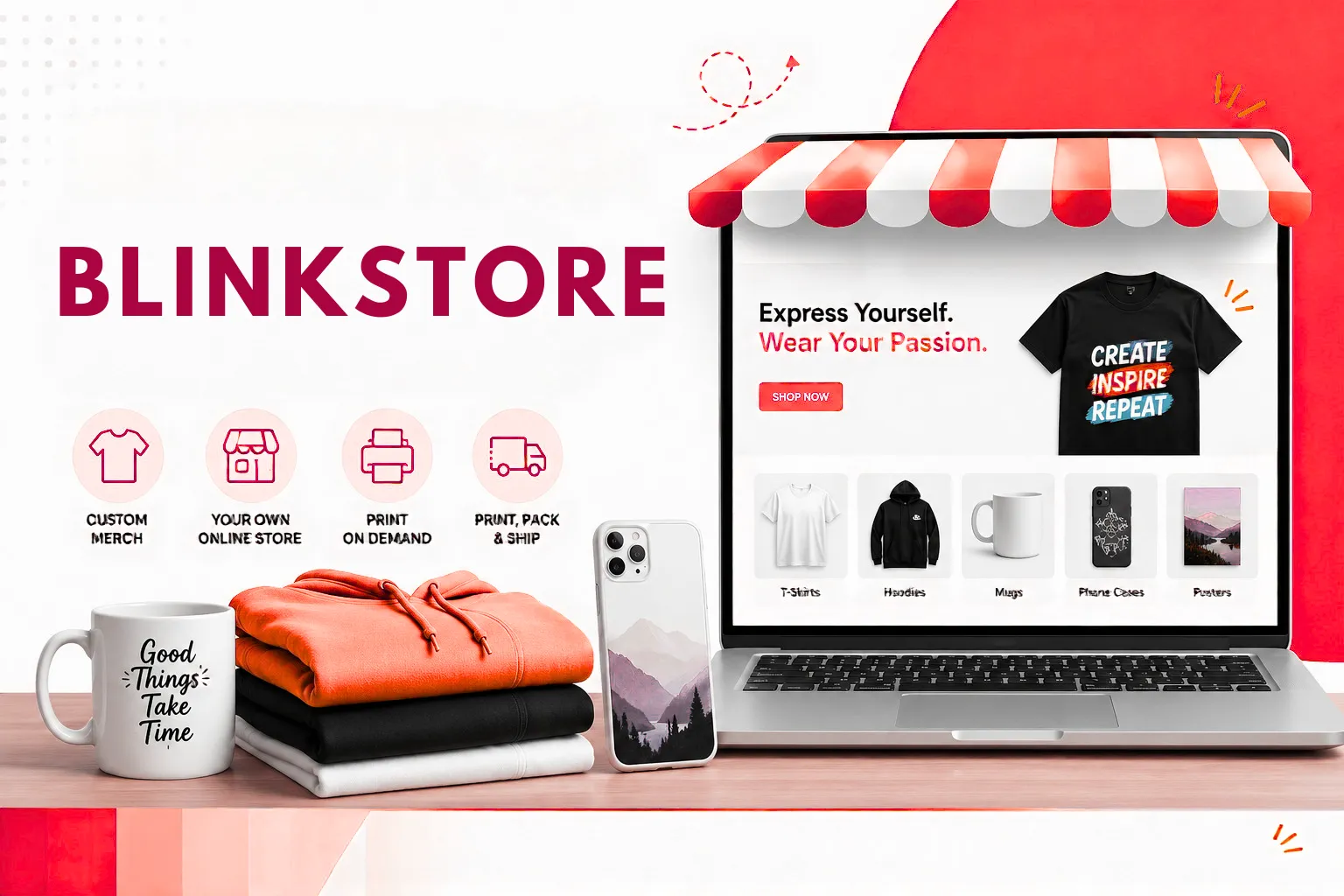
Blinkstore is an Indian print-on-demand platform that allows creators, businesses, artists, and influencers to sell customized merchandise without managing inventory or shipping. Instead of investing in bulk stock, users can create product designs, launch an online store, and sell items only when customers place orders. Blinkstore takes care of printing, packaging, and delivery, making it easier for individuals to start an online merchandise business with minimal upfront costs.
The platform has gained popularity among YouTubers, Instagram creators, colleges, startups, and small businesses looking for a simple way to monetize their audience. Whether someone wants to sell branded T-shirts, hoodies, mugs, or accessories, Blinkstore provides the tools needed to launch a merchandise store without requiring technical expertise.
What Is Blinkstore?
Blinkstore is a print-on-demand and eCommerce platform that enables users to create personalized merchandise stores. Rather than manufacturing products in advance, items are printed only after a customer completes a purchase. This business model reduces financial risk because sellers do not have to purchase or store inventory.
The platform offers ready-to-use online storefronts where creators can display their products. After uploading artwork or logos, users can choose the products they want to sell, set their pricing, and publish their collections. Blinkstore then manages production, shipping, and customer order fulfillment while the seller earns a profit from each successful sale.
This approach has made Blinkstore attractive for people who want to test product ideas or build a merchandise brand without significant investment.
How Blinkstore Works
Blinkstore simplifies the process of launching an online merchandise business. From account creation to order delivery, most operational tasks are automated, allowing creators to focus on designing products and promoting their stores.
Creating an Account
The first step is signing up on Blinkstore with basic personal information. After registration, users gain access to a dashboard where they can manage products, orders, earnings, and store settings. The registration process is straightforward and does not require advanced technical knowledge.
Setting Up Your Online Store
After creating an account, users can customize their online storefront by adding a business name, logo, banner image, description, and contact details. A well-designed store helps establish credibility and gives customers confidence while shopping.
Store customization also allows sellers to create a recognizable brand identity that reflects their niche or audience.
Uploading Designs
Creators upload artwork, graphics, illustrations, or logos that will appear on selected products. Blinkstore provides design placement tools so users can preview how designs will look before publishing.
High-resolution artwork produces better print quality and helps maintain customer satisfaction.
Publishing Products
Once designs are finalized, users select products such as T-shirts, hoodies, mugs, or phone cases. They can set selling prices above the base product cost, allowing them to earn profits from every order.
Products become available for customers immediately after publishing.
Receiving Orders and Payments
When a customer places an order, Blinkstore processes the payment, prints the product, packages it, and ships it directly to the buyer. The seller receives earnings after the order is completed according to the platform’s payment schedule.
This automated workflow eliminates the need to manage inventory, packaging materials, or courier services.
Products Available on Blinkstore
Blinkstore offers multiple merchandise categories suitable for different audiences. Sellers can build complete collections using products that match their brand.
T-Shirts
Custom T-shirts are among the platform’s most popular products. They are available in multiple sizes, colors, and styles, making them suitable for creators, businesses, schools, and events.
Hoodies
Hoodies provide another option for brands looking to offer premium apparel. They are particularly popular during colder seasons and often generate higher profit margins.
Sweatshirts
Sweatshirts combine comfort with casual fashion. Many creators include them as part of seasonal collections or limited-edition merchandise.
Mugs
Custom mugs remain popular because they appeal to a broad audience. Businesses use them for promotional campaigns, while creators often sell them alongside apparel.
Phone Cases
Phone cases allow users to showcase creative artwork while offering practical everyday products. They appeal especially to younger audiences.
Posters
Artists, photographers, and digital creators frequently use posters to sell their artwork without maintaining physical inventory.
Stickers
Stickers are affordable products that encourage impulse purchases and can also be bundled with other merchandise.
Other Merchandise
Depending on product availability, Blinkstore may also offer accessories, notebooks, bags, bottles, and additional customizable items, giving sellers more opportunities to diversify their product catalog.
Blinkstore Print-on-Demand Process
The print-on-demand model is the foundation of Blinkstore’s business. Products are manufactured only after customers place an order, which eliminates the need for warehousing and reduces the financial risk associated with unsold inventory. This process enables creators to focus on building their brand while Blinkstore manages production and logistics.
Printing
Once an order is confirmed, Blinkstore prints the selected design on the chosen product using suitable printing methods. High-quality digital printing helps maintain design clarity, vibrant colors, and durability. Since production begins only after payment confirmation, there is no need for sellers to purchase products in advance.
Packaging
After printing, each item is packaged before shipment. Proper packaging helps protect products during transit and creates a better customer experience when the order arrives. Well-packed merchandise also reduces the chances of damage during delivery.
Shipping
Blinkstore coordinates shipping through its logistics partners and delivers products directly to customers across supported locations. Sellers do not need to arrange courier services or track individual shipments manually. Customers receive shipping updates while the seller can monitor order status through the dashboard.
Customer Support
If customers have questions regarding orders, deliveries, or product issues, Blinkstore provides customer support for order-related concerns. This reduces the workload for creators, allowing them to spend more time designing products and marketing their stores.
Key Features of Blinkstore
Blinkstore includes several features that make it suitable for beginners as well as established creators. These tools simplify online selling while reducing operational responsibilities.
No Inventory Required
One of the biggest advantages of Blinkstore is that sellers do not have to purchase or store inventory. Products are manufactured only after receiving customer orders, making it easier to start with minimal investment.
Custom Storefront
Users receive their own online storefront where they can display merchandise, organize collections, and build a recognizable brand. A personalized store gives creators a professional online presence without requiring web development skills.
Easy Design Upload
Blinkstore provides a straightforward design upload process. Users can add artwork, preview product placement, and publish merchandise without using complex design software or coding knowledge.
Order Management
The dashboard allows sellers to monitor incoming orders, track their progress, and view completed transactions. Having all order information in one place makes store management more efficient.
Payment Processing
Blinkstore manages customer payments through its platform, reducing the need for creators to integrate separate payment gateways. Sellers receive their earnings after completed sales according to the platform’s payout process.
Analytics Dashboard
Performance insights help sellers understand how their store is performing. Metrics related to sales, orders, and revenue allow creators to evaluate which products are generating the best results.
Mobile-Friendly Store
Many shoppers browse and purchase products using smartphones. Blinkstore stores are designed to work smoothly across desktops, tablets, and mobile devices, helping sellers reach customers on different platforms.
Blinkstore Pricing
Understanding Blinkstore’s pricing model helps sellers estimate their profit margins before launching products.
Account Creation Cost
Creating a Blinkstore account generally does not require a large upfront investment, making it accessible to students, creators, freelancers, and small business owners who want to start selling merchandise.
Product Pricing
Each customizable product has a base price that covers manufacturing and fulfillment. Sellers decide the final retail price by adding their desired profit margin above the base cost.
For example, if a T-shirt has a production cost of ₹400 and the creator lists it for ₹650, the difference becomes the seller’s profit before considering applicable taxes or platform-related charges.
Profit Margins
Profit depends entirely on the pricing strategy. Setting prices too low may reduce earnings, while pricing products significantly above market expectations may decrease sales. Finding a balance between affordability and profitability is important for long-term success.
Additional Charges
Depending on the product category, shipping location, taxes, or promotional activities, additional charges may apply. Sellers should review the pricing details carefully before publishing products to avoid unexpected costs.
Who Should Use Blinkstore?
Blinkstore serves a wide variety of users who want to sell customized products without managing production or inventory.
Content Creators
YouTubers, podcasters, bloggers, and digital creators can build merchandise collections that strengthen their personal brand while generating an additional source of income.
YouTubers
Many YouTubers use branded apparel and accessories to engage subscribers beyond video content. Merchandise also helps build stronger community connections with loyal audiences.
Instagram Influencers
Fashion creators, lifestyle influencers, fitness coaches, and travel bloggers often use merchandise to extend their online presence into physical products that followers can purchase.
Artists and Designers
Graphic designers, illustrators, photographers, and digital artists can showcase their creative work on wearable products and home accessories without investing in manufacturing equipment.
Small Businesses
Local businesses frequently use customized merchandise for promotional campaigns, employee uniforms, customer giveaways, and brand awareness initiatives.
Startups
New companies can launch branded merchandise quickly without allocating a significant budget to inventory. This makes Blinkstore an attractive option for startups testing new products or marketing campaigns.
Benefits of Using Blinkstore
Blinkstore offers several advantages for individuals and businesses that want to sell custom merchandise without investing heavily in inventory or logistics. Its print-on-demand model reduces operational complexity while giving creators the flexibility to launch products whenever they want.
Low Startup Cost
One of the biggest reasons creators choose Blinkstore is its affordability. Traditional merchandise businesses often require bulk purchases, storage space, and packaging materials before making the first sale. Blinkstore removes these expenses by producing items only after an order is placed. This allows beginners to start with limited capital and test different product ideas without taking significant financial risks.
No Inventory Management
Managing inventory can be time-consuming and expensive, especially for small businesses. Blinkstore eliminates this responsibility by handling production only when customers place orders. Sellers do not have to worry about unsold stock, warehouse space, or inventory tracking, making store management much simpler.
Also Read – BastiNews.xyz
Easy Order Fulfillment
After an order is placed, Blinkstore handles the printing, packaging, and shipping process. Sellers are not required to print products themselves or coordinate with courier companies. This automated workflow saves time and allows creators to focus on growing their audience instead of managing logistics.
Wide Product Selection
A diverse product catalog helps sellers build a complete merchandise collection. Apparel, drinkware, accessories, and decorative products give creators multiple opportunities to offer products that match their audience’s interests. Expanding into different categories can also increase average order value.
Suitable for Beginners
Blinkstore is designed for users with little or no experience in eCommerce. The platform provides an easy-to-use dashboard where creators can upload designs, manage products, monitor sales, and track earnings without technical expertise. This accessibility makes it appealing to students, freelancers, and first-time entrepreneurs.
Supports Brand Building
Merchandise is more than a source of revenue—it also strengthens brand recognition. Selling customized products allows creators and businesses to increase visibility while building stronger relationships with customers. Consistent branding across products can help create a professional image and encourage repeat purchases.
Limitations of Blinkstore
Although Blinkstore offers numerous benefits, users should also understand its limitations before building their merchandise business.
Limited Customization Options
Compared to fully customized eCommerce websites, Blinkstore provides fewer options for modifying storefront layouts and advanced functionality. Businesses requiring highly personalized shopping experiences may eventually need their own independent online store.
Product Availability
The product catalog may change over time depending on manufacturing capabilities and supplier availability. Some products or color variants may occasionally be unavailable, requiring sellers to adjust their collections.
Shipping Timelines
Delivery times depend on production schedules, customer location, and courier services. Since every product is manufactured after purchase, customers should expect longer delivery times compared to products already stored in warehouses.
Competition Among Creators
Thousands of creators use print-on-demand platforms, making competition increasingly strong. Simply uploading products is rarely enough to generate consistent sales. Effective marketing, original designs, and audience engagement are essential for standing out.
Dependence on Platform Policies
Creators rely on Blinkstore’s pricing structure, policies, and operational decisions. Any changes to platform fees, product availability, or payment procedures may affect sellers’ businesses. Understanding platform terms and staying updated with policy changes is important.
Tips for Selling Successfully on Blinkstore
Building a successful merchandise business requires more than uploading attractive designs. Consistent branding, audience engagement, and effective marketing play a significant role in generating sales.
Create Original Designs
Unique artwork helps products stand out in a crowded marketplace. Rather than copying existing trends, creators should focus on original graphics, memorable slogans, or niche-specific designs that appeal to their target audience. Exclusive designs also encourage repeat customers who value originality.
Build a Personal Brand
People often purchase merchandise because they connect with a creator or brand. Maintaining consistent messaging across social media, videos, blogs, and merchandise helps build trust and recognition. A strong brand identity can influence purchasing decisions more than the product itself.
Promote Through Social Media
Marketing is one of the most important aspects of selling merchandise. Sharing product launches, behind-the-scenes design processes, customer photos, and limited-time offers across social media platforms helps drive traffic to the store. Regular promotion keeps products visible and increases sales opportunities.
Optimize Product Listings
Well-written product titles, descriptions, and images improve the shopping experience. Clear information about product materials, sizing, colors, and care instructions helps customers make informed purchasing decisions while reducing the likelihood of returns.
Offer Seasonal Collections
Launching themed collections around festivals, holidays, sports events, or special occasions can create excitement among customers. Limited-edition merchandise often generates urgency and encourages quicker purchasing decisions, especially when combined with promotional campaigns.
Blinkstore vs Other Print-on-Demand Platforms
Choosing a print-on-demand platform depends on business goals, target audience, and desired features. Blinkstore competes with several established platforms by focusing on creators and businesses looking for an easy way to sell merchandise in India.
Blinkstore vs Printrove
Both Blinkstore and Printrove follow a print-on-demand business model, allowing sellers to avoid inventory management. Blinkstore emphasizes ready-made storefronts that enable creators to start selling quickly, while Printrove is often preferred by businesses that want deeper integration with independent eCommerce platforms such as Shopify and WooCommerce.
Blinkstore vs Merch by Amazon
Merch by Amazon gives sellers access to Amazon’s massive customer base, but acceptance into the program may take time and competition is intense. Blinkstore allows creators to launch stores more quickly and maintain direct control over their brand identity. However, sellers are responsible for driving traffic to their Blinkstore stores through marketing efforts.
Blinkstore vs Shopify Print-on-Demand
Shopify offers complete control over store customization, branding, and third-party integrations. However, users must pay for a Shopify subscription and configure additional print-on-demand applications. Blinkstore simplifies the process by combining store creation, manufacturing, and fulfillment into a single platform, making it easier for beginners who want an all-in-one solution.
Common Challenges and How to Overcome Them
Starting a merchandise business through Blinkstore is relatively simple, but achieving consistent sales requires planning, creativity, and ongoing marketing. Understanding common obstacles can help sellers build a stronger and more sustainable business.
Low Initial Sales
Many new sellers expect immediate sales after launching their store, but attracting customers takes time. A newly created store has little visibility, especially if the creator has a small audience. Building trust, publishing new designs regularly, and maintaining consistent promotion are essential for increasing sales over time.
Rather than focusing on dozens of products, creators should begin with a smaller collection of well-designed merchandise that represents their brand clearly. Monitoring customer feedback and sales performance also helps identify which products deserve more attention.
Marketing Products
Launching a store is only one part of the process. Without marketing, potential customers may never find the products. Successful Blinkstore sellers actively promote their merchandise through YouTube videos, Instagram posts, Facebook pages, email newsletters, blogs, and other digital channels.
Sharing customer reviews, showcasing product photos, and announcing limited-time offers can increase engagement. Collaborations with influencers or content creators in similar niches may also help reach new audiences and generate additional sales.
Managing Customer Expectations
Customers expect products that match the images displayed in the online store. Providing accurate descriptions, sizing information, color details, and realistic product images helps reduce misunderstandings. Sellers should also communicate estimated delivery times clearly since print-on-demand products require manufacturing before shipping.
Responding to customer questions promptly and maintaining transparent communication contributes to a better shopping experience and encourages repeat purchases.
Improving Conversion Rates
Not every visitor becomes a customer. Improving conversion rates involves optimizing product pages, writing informative descriptions, using high-quality product images, and setting competitive prices. A simple checkout process and clear return policies can also encourage more purchases.
Testing different designs, pricing strategies, and promotional campaigns helps sellers understand what appeals most to their audience. Reviewing sales data regularly allows creators to make informed decisions that improve overall store performance.
Conclusion
Blinkstore provides an accessible way for creators, artists, influencers, startups, and businesses to enter the print-on-demand market without investing in inventory or handling logistics. Its all-in-one approach combines online storefront creation, product manufacturing, payment processing, and order fulfillment, allowing sellers to focus on designing merchandise and growing their audience.
The platform is particularly suitable for individuals who want to monetize their personal brand or test new product ideas with minimal financial risk. While success depends on factors such as product quality, marketing, pricing, and audience engagement, Blinkstore removes many of the operational barriers that traditionally make launching a merchandise business difficult.
For creators looking to sell customized products without managing production and shipping themselves, Blinkstore offers a practical starting point. With original designs, consistent promotion, and a clear brand identity, sellers can use the platform to build an online merchandise business and create an additional source of income.
Frequently Asked Questions
How does Blinkstore make money?
Blinkstore earns revenue through its print-on-demand business model. The platform charges a base price for manufacturing and fulfilling each product, while creators set their own selling prices above that amount to generate profits.
What products can I sell on Blinkstore?
Blinkstore supports a variety of customizable merchandise, including T-shirts, hoodies, sweatshirts, mugs, phone cases, posters, stickers, and selected accessories. Product availability may vary over time.
Does Blinkstore handle shipping?
Yes. Blinkstore manages printing, packaging, and shipping after an order is placed. Sellers are not required to arrange logistics or maintain inventory.
How are creators paid on Blinkstore?
Creators earn the difference between the product’s base cost and the selling price they set. Payments are typically processed according to Blinkstore’s payout schedule after eligible orders are completed.
Can beginners start selling on Blinkstore?
Yes. Blinkstore is designed for users with little or no experience in eCommerce. The platform provides tools for creating a store, uploading designs, managing products, and tracking sales, making it suitable for beginners as well as experienced entrepreneurs.